
Patio brick pavers have become increasingly popular among homeowners looking to create beautiful and functional outdoor living spaces. These versatile paving stones offer a classic, timeless look that complements any architectural style while providing durability and easy maintenance. In this comprehensive guide, we’ll walk you through the process of selecting the perfect brick pavers, designing your dream patio, installing them like a pro, and keeping them looking fantastic for years to come.

Types of Brick Pavers
When it comes to choosing brick pavers for your patio, you have two main options: clay and concrete.
Clay brick pavers are made from natural clay that’s fired at high temperatures, resulting in a dense, durable material that can withstand the test of time. While clay pavers offer a limited color palette due to the natural hues of the clay, they provide an authentic, timeless appearance that many homeowners adore.
On the other hand, concrete brick pavers are crafted from a mixture of cement, sand, and aggregates. These pavers can mimic the look of clay bricks but come in a wide array of colors and textures, giving you more design flexibility. Concrete pavers are also known for their strength and longevity, making them a popular choice for patio projects.
Advantages of Brick Pavers
Brick pavers offer a host of benefits that make them a top choice for patio construction:
- Durability: Brick pavers are built to last, withstanding heavy foot traffic, extreme weather conditions, and the test of time. With proper installation and maintenance, your brick paver patio will be a reliable outdoor living space for decades.
- Timeless beauty: The classic, warm appearance of brick pavers adds a touch of elegance to any home, complementing various architectural styles from traditional to modern. The rich, earthy tones create an inviting atmosphere that never goes out of style.
- Versatility: Brick pavers come in a variety of shapes, sizes, and colors, allowing you to create endless design possibilities. Whether you prefer a classic herringbone pattern or a modern geometric layout, brick pavers can bring your vision to life.
- Easy maintenance: Caring for your brick paver patio is a breeze. Regular sweeping, occasional power washing, and prompt replacement of any damaged pavers will keep your patio looking its best with minimal effort.
Factors to Consider When Choosing Brick Pavers
To select the perfect brick pavers for your patio, consider the following factors:
- Size and shape: Brick pavers come in standard sizes, such as 4″x8″, 6″x6″, and 6″x9″, as well as various shapes like rectangles, squares, and cobblestones. Choose a size and shape that complements your patio design and home’s architecture.
- Color and texture: While traditional red brick pavers are a classic choice, you can also opt for earthy tones like tan, brown, or gray. For a more rustic look, consider textured or tumbled pavers that mimic the appearance of aged brick.
- Quality: Invest in high-quality, dense brick pavers that meet ASTM standards for durability and strength. Premium pavers may cost more upfront but will save you money in the long run by requiring fewer repairs and replacements.
Designing Your Patio
Before installing your brick pavers, take the time to plan your patio design:
- Patio size and shape: Measure the available space and consider how you’ll use the patio (e.g., dining, lounging, entertaining). Choose a shape that complements your home and landscaping, such as rectangular, square, or curved.
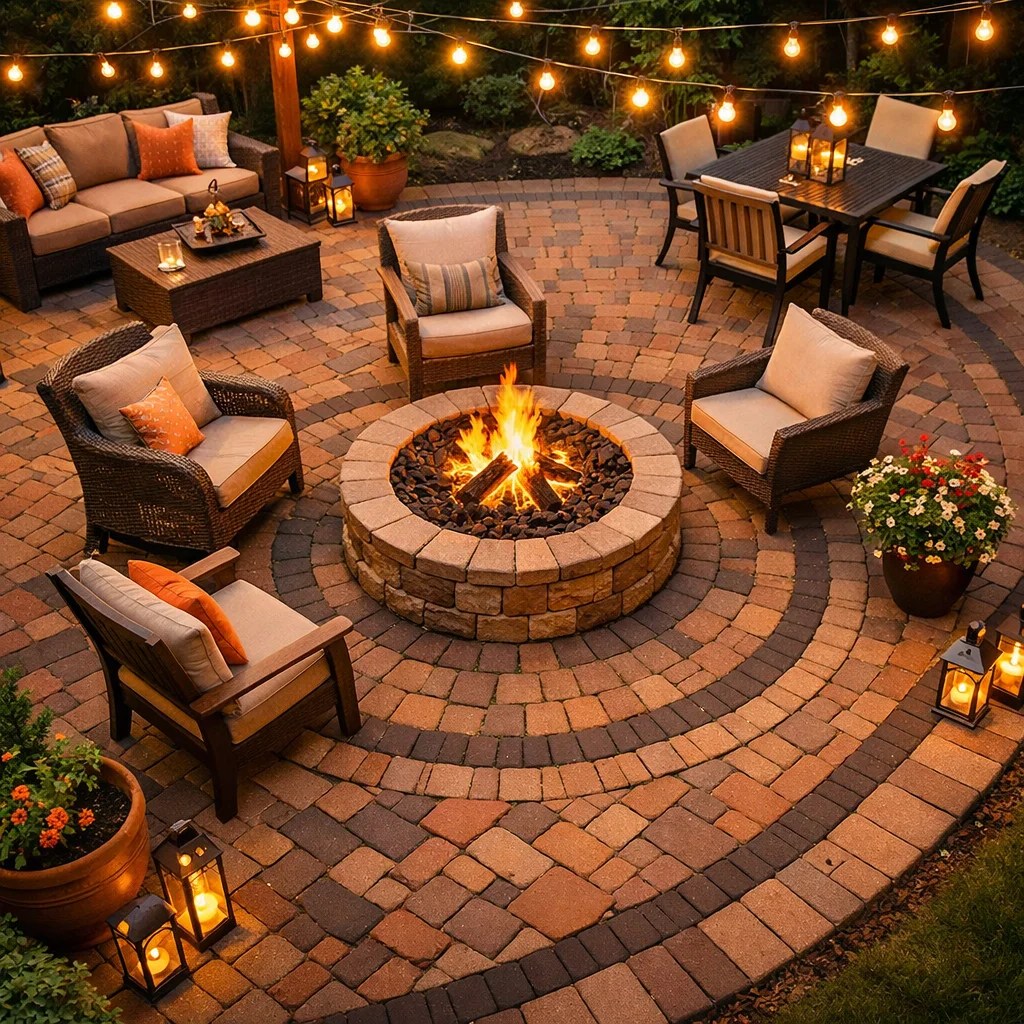
- Paver patterns: Select a paver pattern that fits your style and patio shape. Popular options include running bond, herringbone, basket weave, and pinwheel. Don’t be afraid to mix and match patterns for a one-of-a-kind look.
- Borders and accents: Frame your patio with a contrasting paver color or style to create visual interest and definition. You can also incorporate accent pavers to form intricate designs or highlight specific areas.
- Drainage: Proper drainage is crucial to prevent water pooling and damage to your patio. Make sure your patio design includes a slight slope away from your home and consider installing drainage channels if necessary.
Installing Patio Brick Pavers
While hiring a professional is always an option, installing brick pavers is a manageable DIY project if you’re up for the challenge. Here’s a step-by-step guide:
Step 1: Plan and prepare the area
- Mark the patio boundaries using stakes and string
- Excavate the area to a depth of 6-8 inches
- Compact the soil using a hand tamper or plate compactor
Step 2: Create a solid base
- Add a 4-inch layer of gravel and compact it thoroughly
- Install edging restraints around the perimeter to keep pavers in place
Step 3: Add bedding sand
- Spread a 1-inch layer of coarse sand over the gravel
- Level the sand using a straight board or screed rail
Step 4: Lay the pavers
- Start in one corner and lay the pavers according to your chosen pattern
- Use a rubber mallet to tap pavers into place, ensuring they’re level and snug
- Maintain consistent 1/8-inch gaps between pavers for sand jointing
Step 5: Cut pavers (if needed)
- For precise cuts around edges or obstacles, use a wet saw or masonry saw
Step 6: Compact and sand
- Use a plate compactor to tamp down the pavers, ensuring a uniform surface
- Sweep polymeric sand into the joints until filled, then mist the patio to activate the sand’s binding agent
Maintaining Your Brick Paver Patio
To keep your brick paver patio looking its best for years to come, follow these maintenance tips:
- Regular sweeping: Use a broom to remove debris, leaves, and dirt from your patio surface and jointing sand.
- Weed removal: Promptly pull any weeds that sprout between pavers to prevent them from taking root and causing damage.
- Power washing: Give your patio a deep clean once a year using a power washer to remove stubborn stains and refresh the bricks’ appearance.
- Replacing damaged pavers: If you notice any cracked, chipped, or sunken pavers, replace them immediately to maintain your patio’s structural integrity and prevent tripping hazards.
- Sealing: Apply a high-quality sealer to your brick pavers every 3-5 years to protect them from stains, enhance their color, and extend their lifespan.
Conclusion
Investing in a brick paver patio is a wise decision that will provide you with years of outdoor enjoyment and boost your home’s curb appeal. By choosing premium pavers, planning a thoughtful design, and following proper installation techniques, you’ll create a stunning, durable patio that serves as the centerpiece of your backyard oasis.
Remember, a well-maintained brick paver patio not only enhances your home’s beauty but also provides a welcoming space for making cherished memories with family and friends. So, roll up your sleeves, grab your tools, and bring your dream patio to life with the timeless charm of brick pavers.
Get our professional roofing service; by just filling out the form or call.


